
10 Gentle Bodyweight Exercises Seniors Can Do at Home (No Equipment Needed)
These are ten of the gentle, bodyweight movements I use with my virtual coaching clients all over the world. There is no equipment. No floor work. Just a sturdy chair, a little floor space, and your own body. I've grouped them the same way I structure my live 30-minute sessions: warm-up, cardio and strength, and cool-down. If you do all ten in order, you have a complete, safe, beginner-friendly senior workout.
Before You Begin
- Use a chair without wheels, ideally without arms, with a firm seat.
- Wear flat shoes or grippy socks.
- Have water nearby.
- If you have heart, blood pressure, or balance conditions, check with your doctor before starting.
- Stop immediately if you feel sharp pain, chest discomfort, or dizziness. Mild muscle fatigue is normal; pain is not.
Warm-Up Movements (Joint Mobility)
1. Seated Ankle Circles
Sit tall. Lift one foot slightly off the floor. Slowly circle the ankle 10 times clockwise, then 10 times counter-clockwise. Switch feet. Why: warms the joint that controls almost every step you take.
2. Seated Knee Marches
Sit tall, feet flat. Lift one knee toward the ceiling, lower with control. Alternate legs for 30 seconds. Why: lubricates the knee and gently activates the hip flexors.
3. Gentle Hip Openers (Standing or Seated)
Standing behind a chair (or seated), slowly draw one knee in a small circle outward and back to the floor. Five circles per leg, each direction. Why: the hips carry your weight; mobile hips mean a confident gait.
4. Wrist Rolls and Shoulder Rolls
Make slow fists and circle the wrists, then roll the shoulders backward 10 times and forward 10 times. Why: reverses the rounded posture that comes from sitting and reading.
Cardio & Strength Movements (Bodyweight Only)
5. Sit-to-Stand from a Chair
The single most useful exercise in senior fitness. Sit on the front of the chair, feet shoulder-width. Lean slightly forward, press through the heels, stand up. Sit down with control. Repeat 8–12 times. Why: trains the exact muscles you use to get off the toilet, off the sofa, and out of the car. Sit-to-stand training is widely shown to improve balance and walking speed in older adults with mobility limitations.
6. Side-Steps with Chair Support
Hold the back of the chair. Step the right foot to the side, bring the left to meet it. Reverse. Eight steps each way. Why: trains the lateral hip muscles that prevent the most common type of fall.
7. Calf Raises (Heel Lifts)
Standing behind a chair, rise onto the balls of both feet, hold for one second, lower with control. 10–15 repetitions. Why: strengthens the calves, which act as the body's second heart for circulation.
8. Standing or Seated Marches with Arm Swings
March in place — standing, with chair support if needed, or seated — for 60 seconds, swinging the arms naturally. Why: gentle, joint-friendly cardiovascular work.
Cool-Down Stretches
9. Seated Hamstring Reach
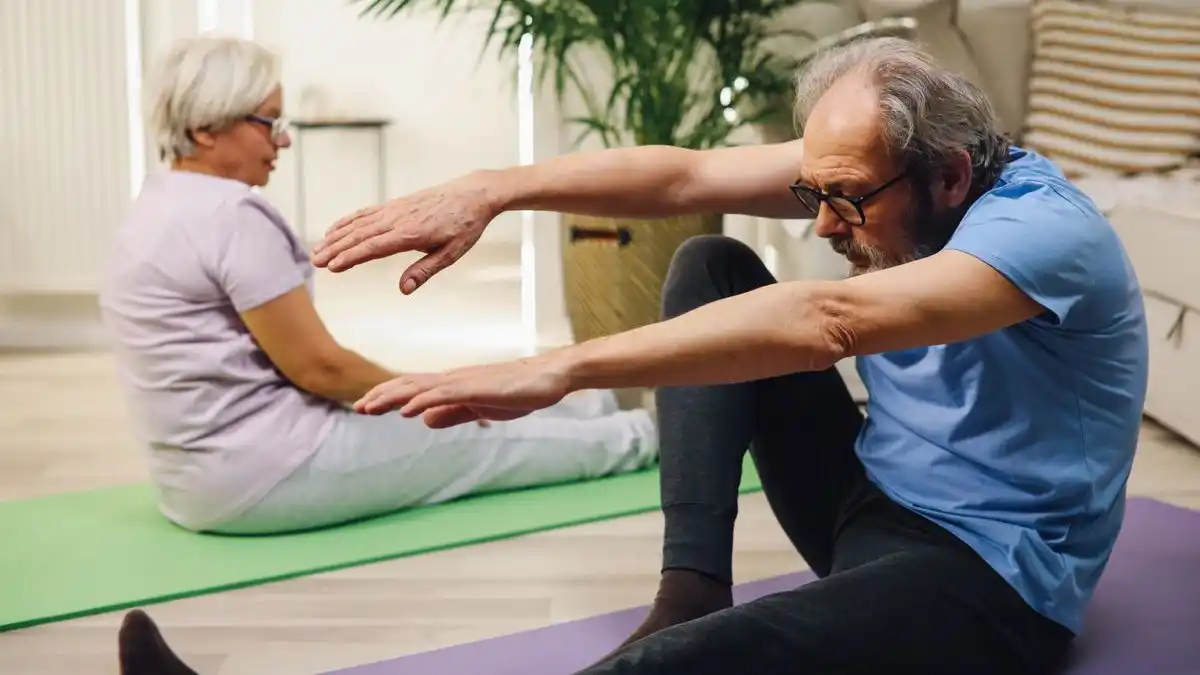
Sit on the edge of the chair, extend one leg straight in front, toes up. Hinge gently forward from the hips until you feel a stretch in the back of the thigh. Hold 15–20 seconds. Switch sides. Why: tight hamstrings pull on the lower back; loosening them protects your spine.
10. Cross-Body Shoulder Stretch
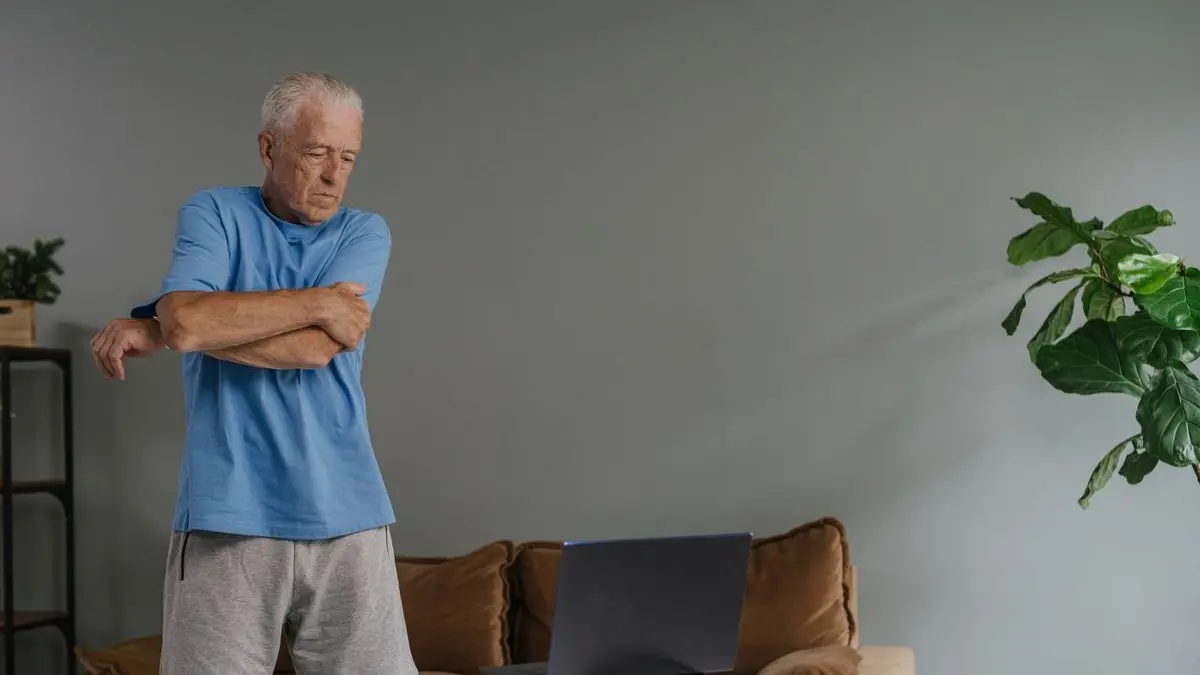
Bring one arm across your chest. Use the opposite hand to gently draw it closer. Hold 15–20 seconds. Switch arms. Why: opens the upper back and shoulders, restoring posture and breath depth.
Are These Exercises Safe for Me?
For most older adults in reasonable health, yes. They are low-impact, joint-friendly, and adaptable. But "safe in general" is not the same as "safe for you today." Live coaching gives me the chance to watch your specific knee, your specific balance, your specific energy — and to swap any exercise for a gentler version in real time. That is the difference between following a generic list and being coached.
Frequently Asked Questions
How often should I do these exercises?
Three times a week is the sweet spot. Physical activity guidelines recommend older adults do 150 minutes of moderate aerobic activity per week plus muscle-strengthening activity on two or more days, and the WHO additionally recommends balance-and-strength training on three or more days a week.
Do I need to stand the whole time?
No. Any of these can be modified to a seated version. In my live sessions, I switch between seated and standing depending on how each client is doing that day.
What if I have arthritis or balance issues?
These movements are commonly recommended for both, but the range, depth, and pace should be tailored to you. That's exactly what a virtual coach is for.
Want a coach watching you do these live?
A list on a screen can teach you the moves. A live coach makes sure you do them safely, gently, and consistently for the next ten years — three 30-minute sessions a week, anywhere in the world.
Book a free consultation